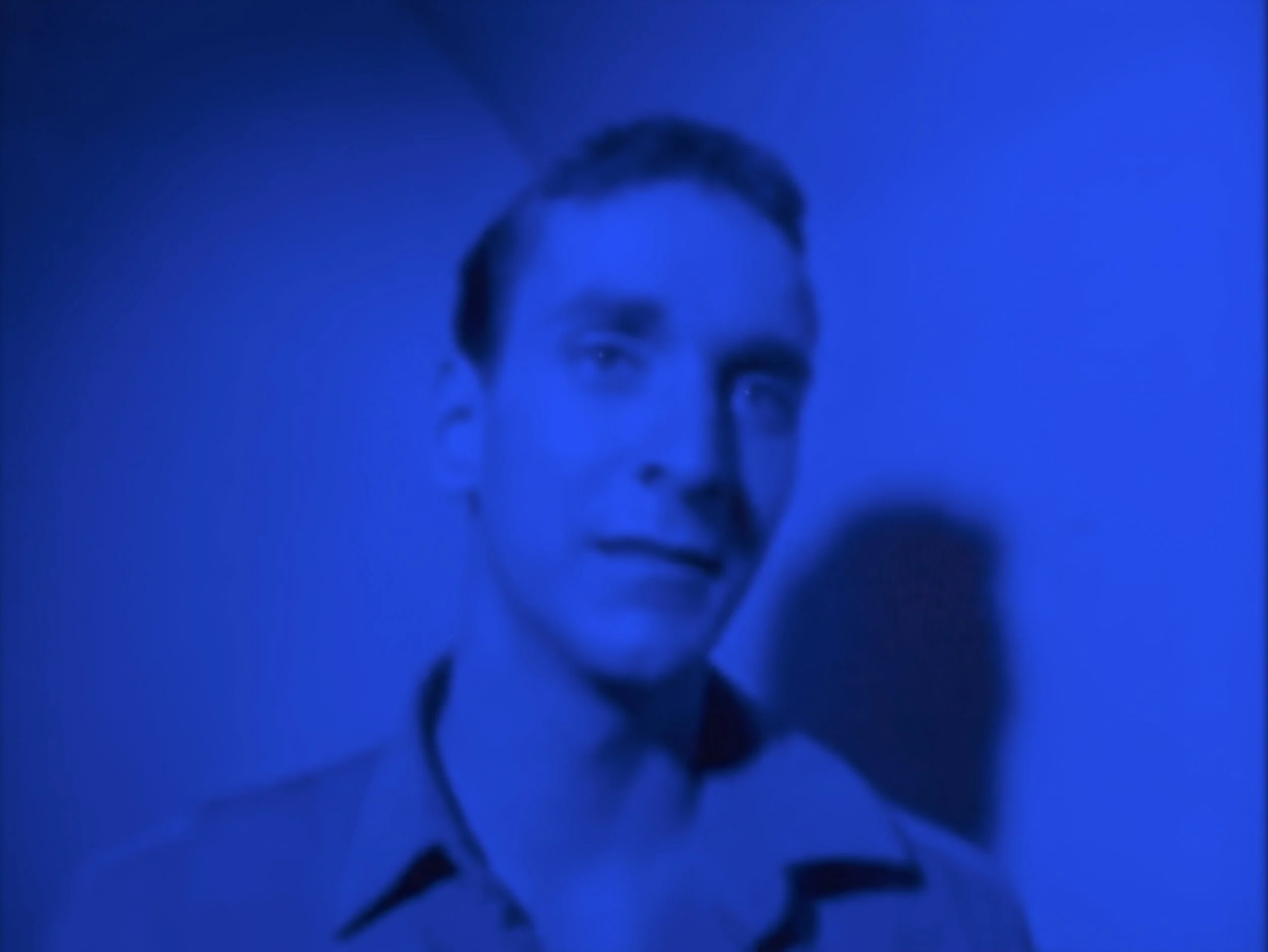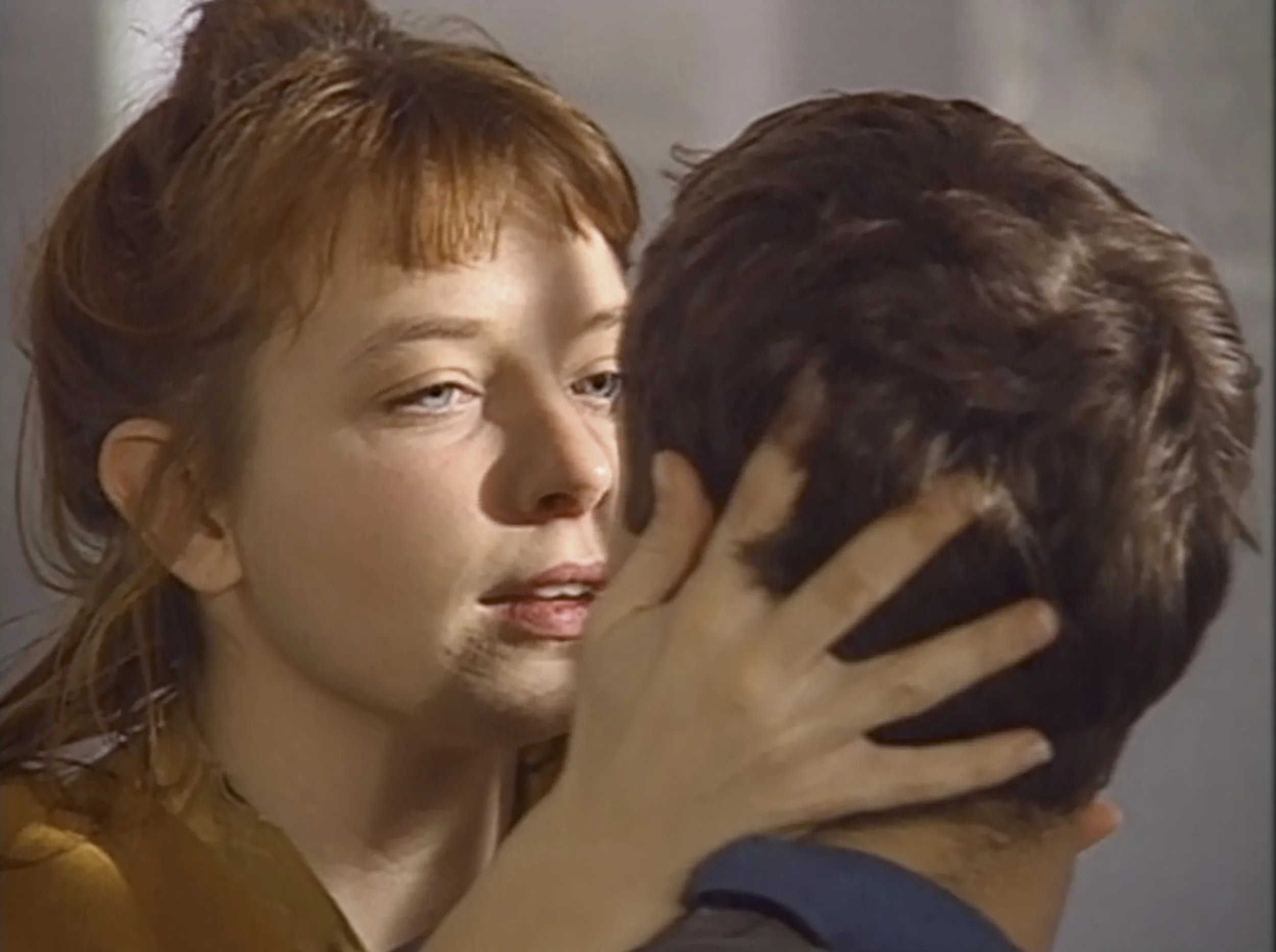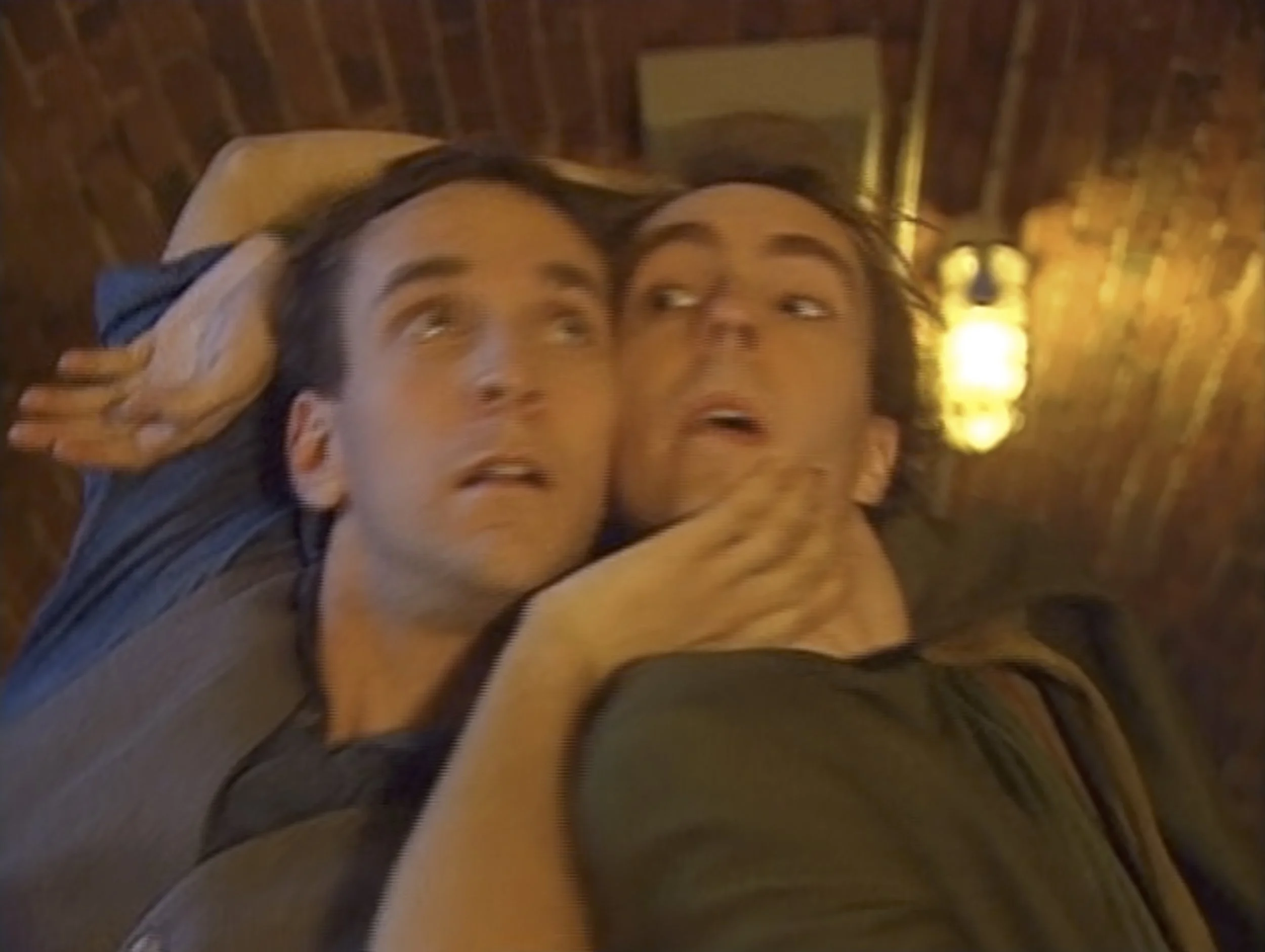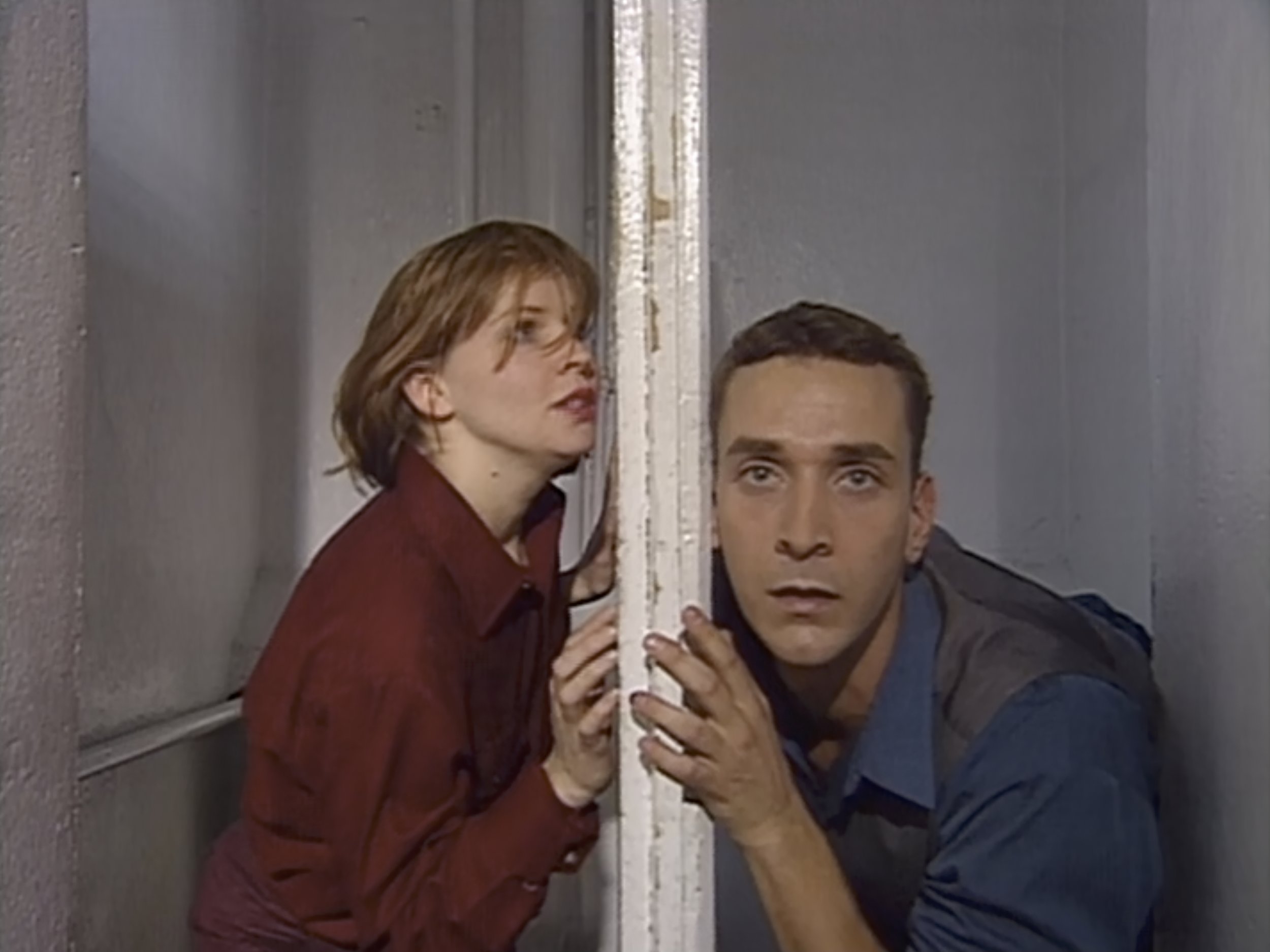
Mur Mur (1993)
Choreographed by Harold Rheaume and directed by Katrina McPherson. Mur Mir was created in Autumn 1993, when the pair were in residency together at Le Groupe de la place Royale, Ottawa.
Reflection on Mur Mur by Katrina
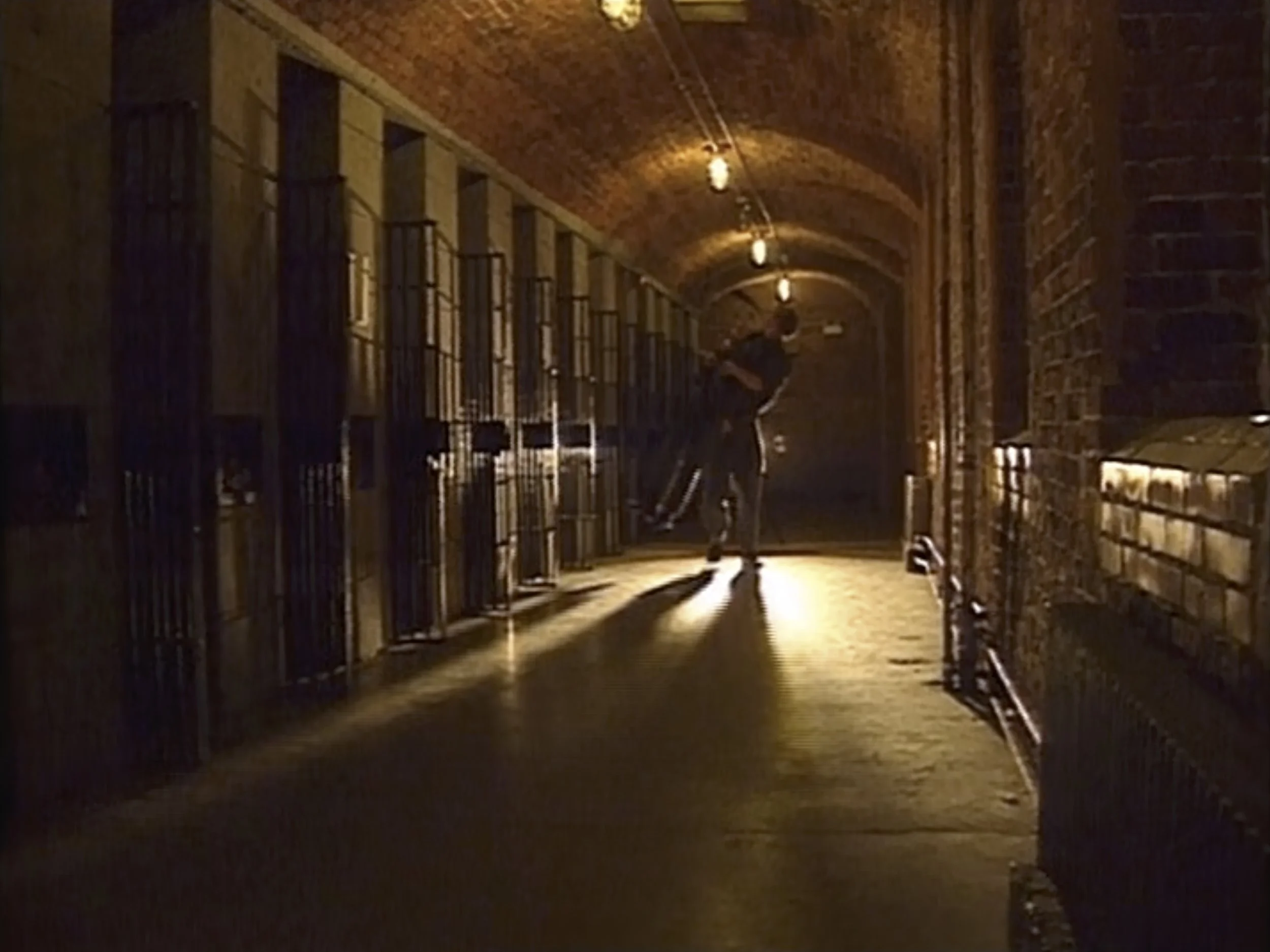
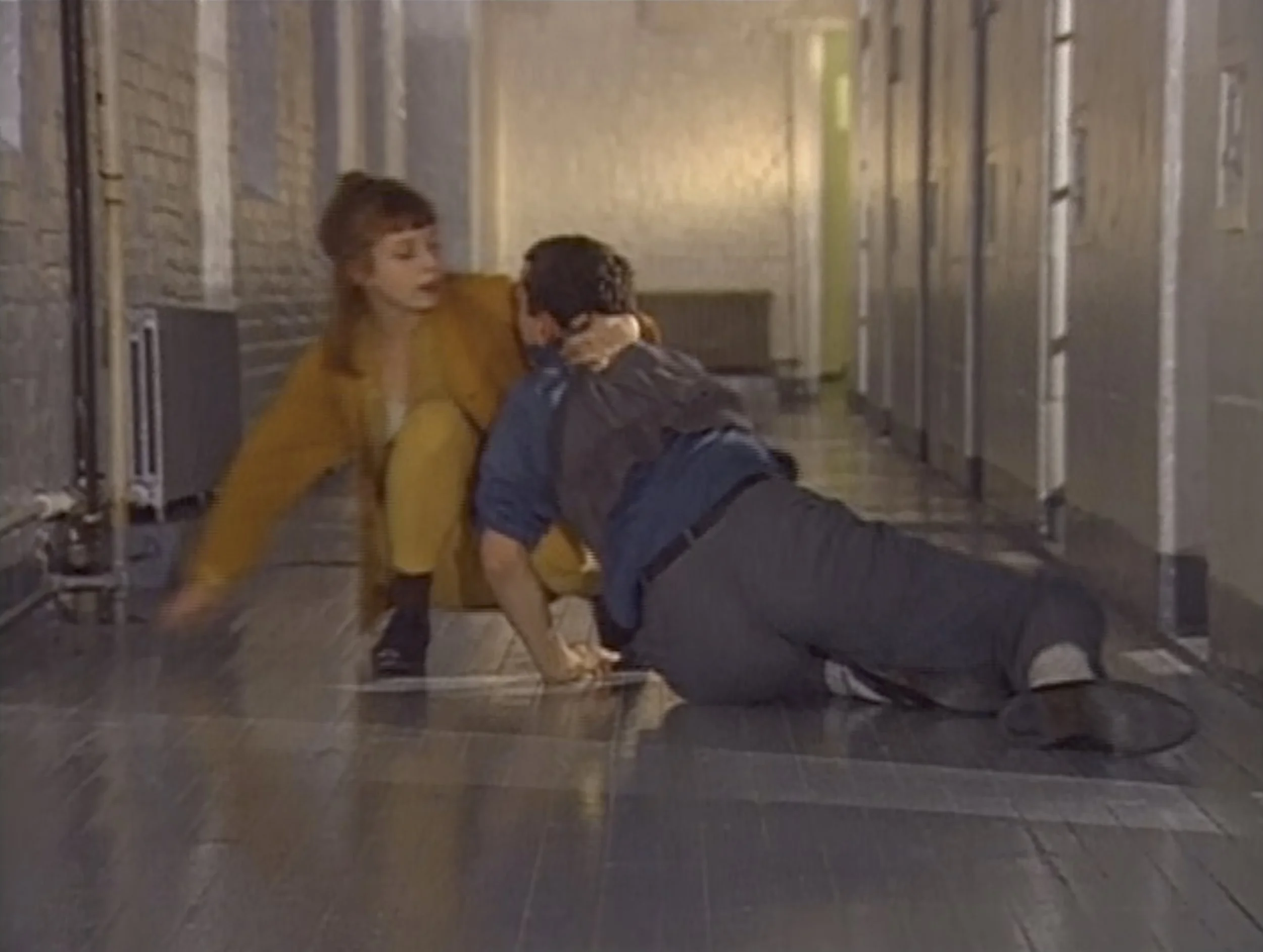
“Harold and I had been invited to spend two weeks in residence with dance company Le Group de la Place Royale, developing and making a new screendance film. We filmed in the evocative red brick cells and long corridors of a 19th Century prison (now being used as a youth hostel). We devised a simple narrative as the starting point for the work and Harold created the choreography with the dancers. I carefully storyboarded frames and camera movements in relation to the set choreography, which we then proceeded to film with the crew and dancers on location.
Each morning, as a warmup for both the cinematographer and the dancers, I decided to try out some improvisation “games”. These had rules such as “the camera tries to frame the dancers, whilst they try not to be in frame” or “the camera circles and the dancers find ways of crossing in and out of the camera’s path”. These improvisation scores - or strategies – enabled the dancers and the cinematographer to move beyond the limits of trying to achieve the specific framing of a particular movement. This collective, playful activity encouraged everyone to communicate and to practice staying alert to each other. It was a fun way to start each filming day.
At the end of filming for the project, when I reviewed the video tapes, it was this improvised material that was the liveliest of all the footage. It had the most engaging sense of energy and spontaneity, with interesting textures and shapes moving through the frame. These contrasted well with the more formally constructed shots, providing a strong variety of material for the edit, which was a combination of montage and continuity of action editing. Moreover, there was a powerful quality of focussed intentionality in the improvised images which seemed to have captured the dancers’ and cinematographer’s “thinking in doing” (Midgelow: )
This positive generative experience encouraged me to continue to research ways of using improvisation in my screen practice over the years that followed, opening new and expansive areas for exploration. Over time, and working with various dance artists, I have developed an approach to making screendance that has improvisation at its heart.”
From “A Space of Time: The Evolution of a Screendance Practice” by
Katrina McPherson. A thesis submitted in partial fulfilment of the requirements of Edinburgh Napier University, for the award of Doctor of Philosophy
March 2023