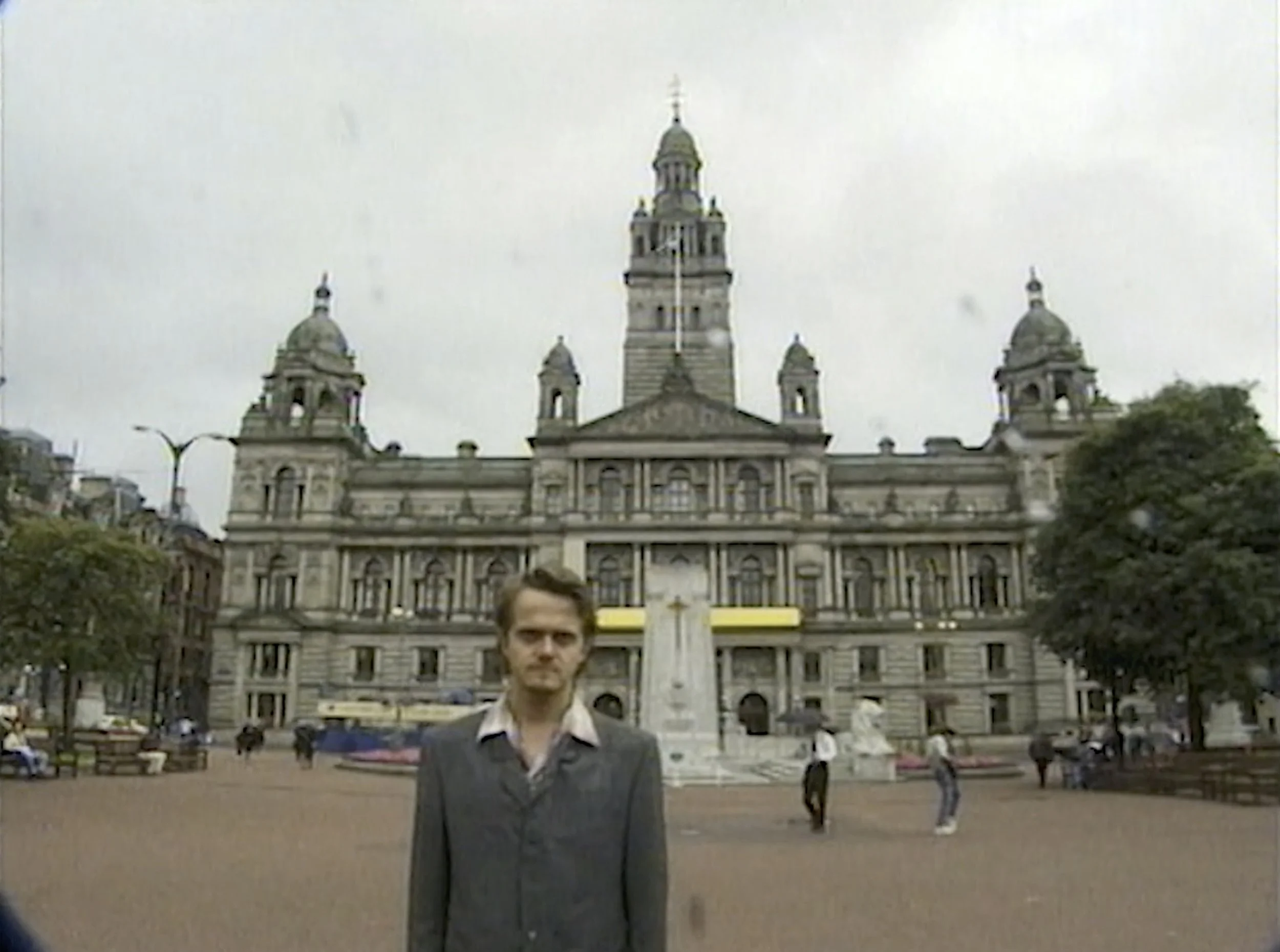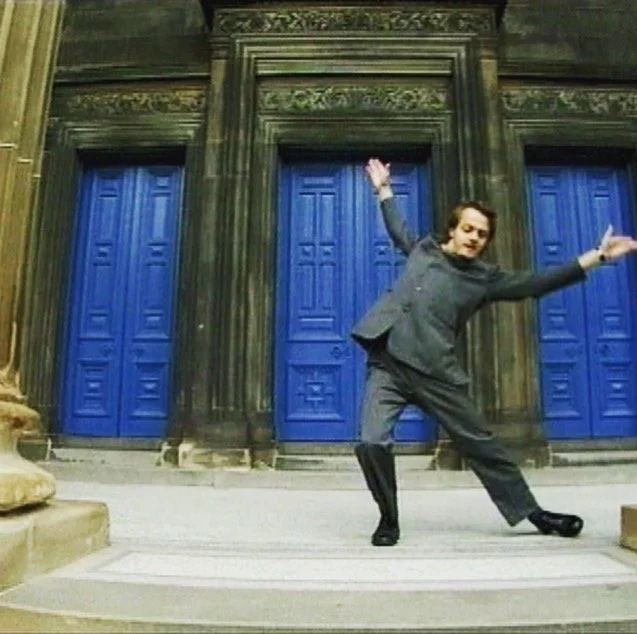
Pictureshow (1997)
Pictureshow is a collaborative work by Katrina McPherson, choreographer and performer Harold Rheaume, writer Marianne Carey and composer Haftor Medboe.
It was both inspired by and a deconstruction of musical films, Buster Keaton and the possibilities of video dance in live performance context.
Reflection on Pictureshow by Katrina
In 1998, I was invited to write an article about my video dance practice for the art publication Coil. In it, I describes the two different iterations of Pictureshow, recent performances of which had taken place in a gallery space in Glasgow’s Merchant City and the second at Tangente Theatre, Montreal. I wrote:
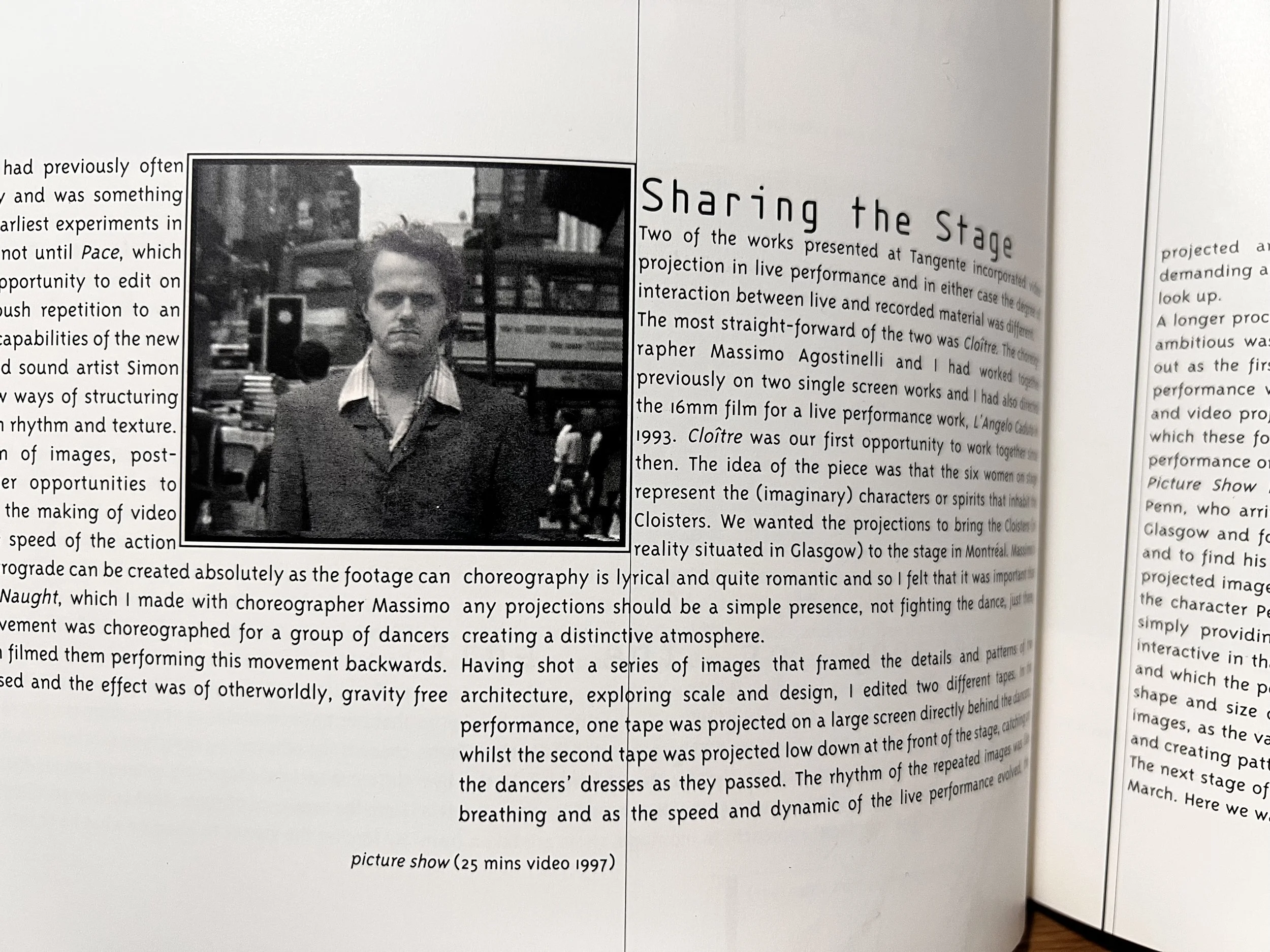
“Sharing the Stage
(Pictureshow) started out as the first stage of a large multi-media performance work, which fused music, dance, text and video projection. The aim was to create a work in which these four media coexisted and interacted in performance on an equal basis.
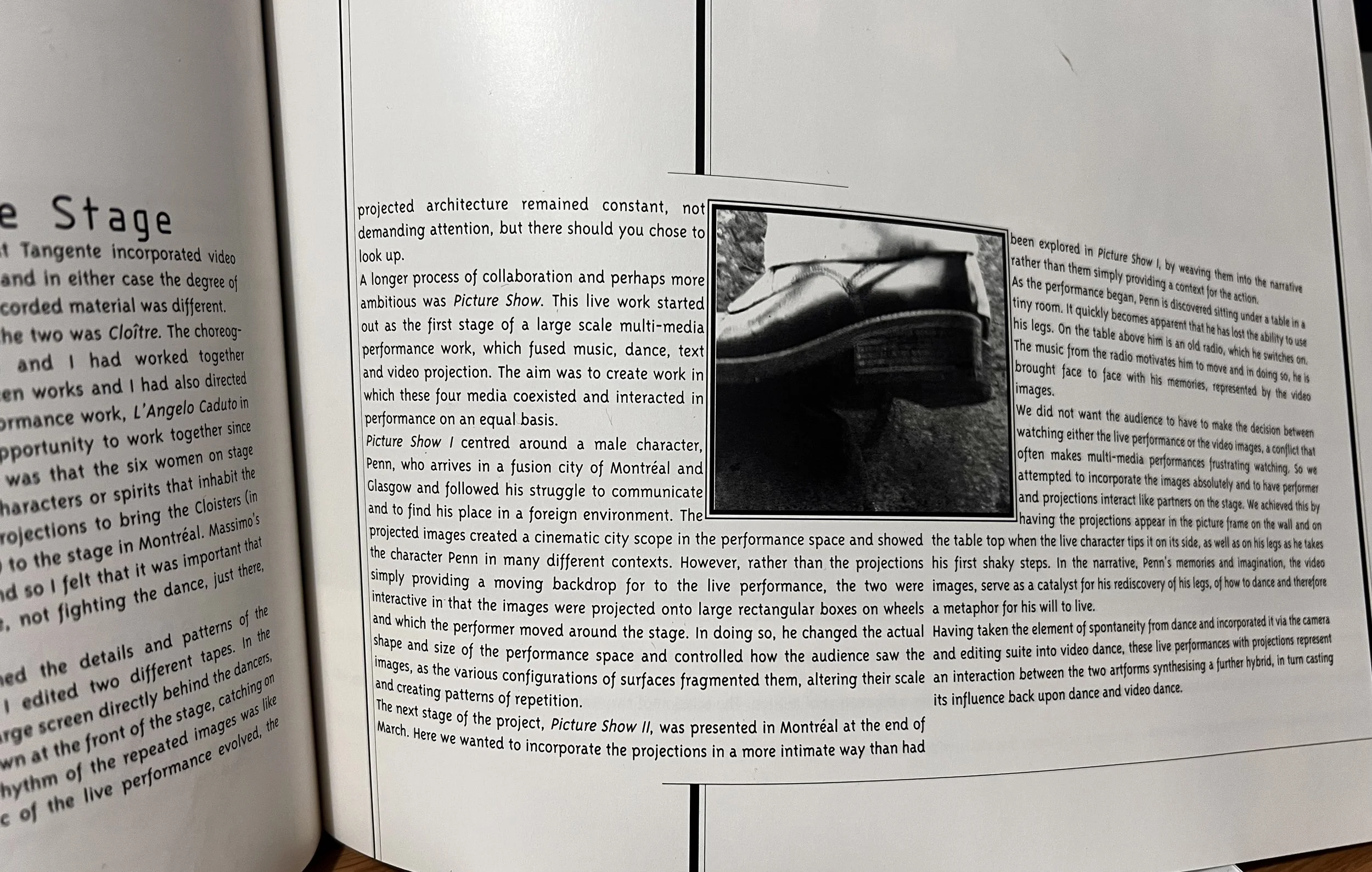
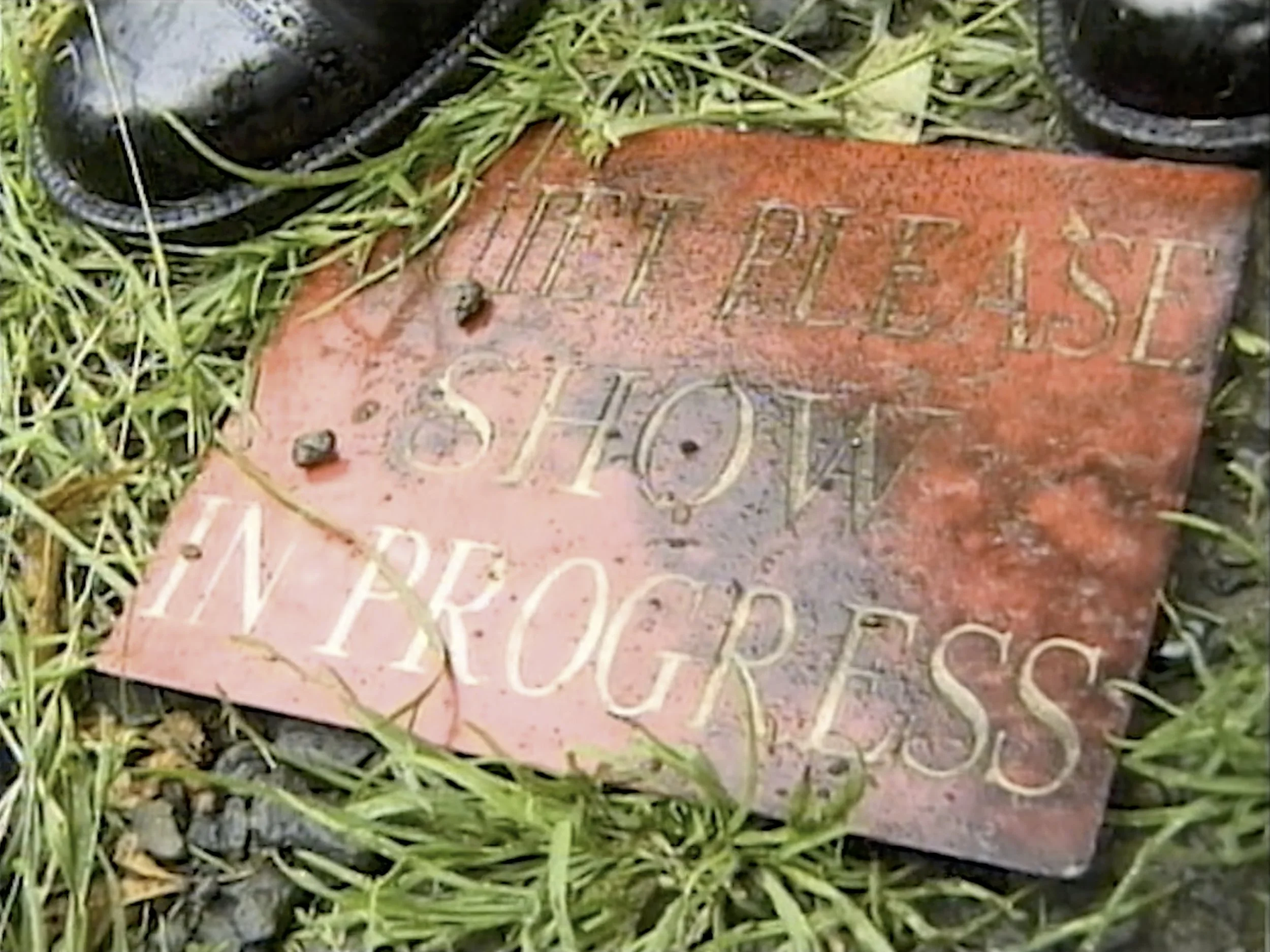
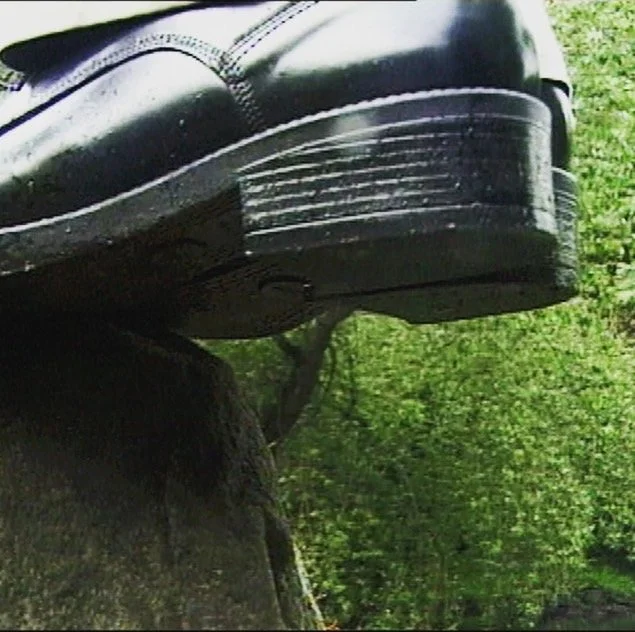
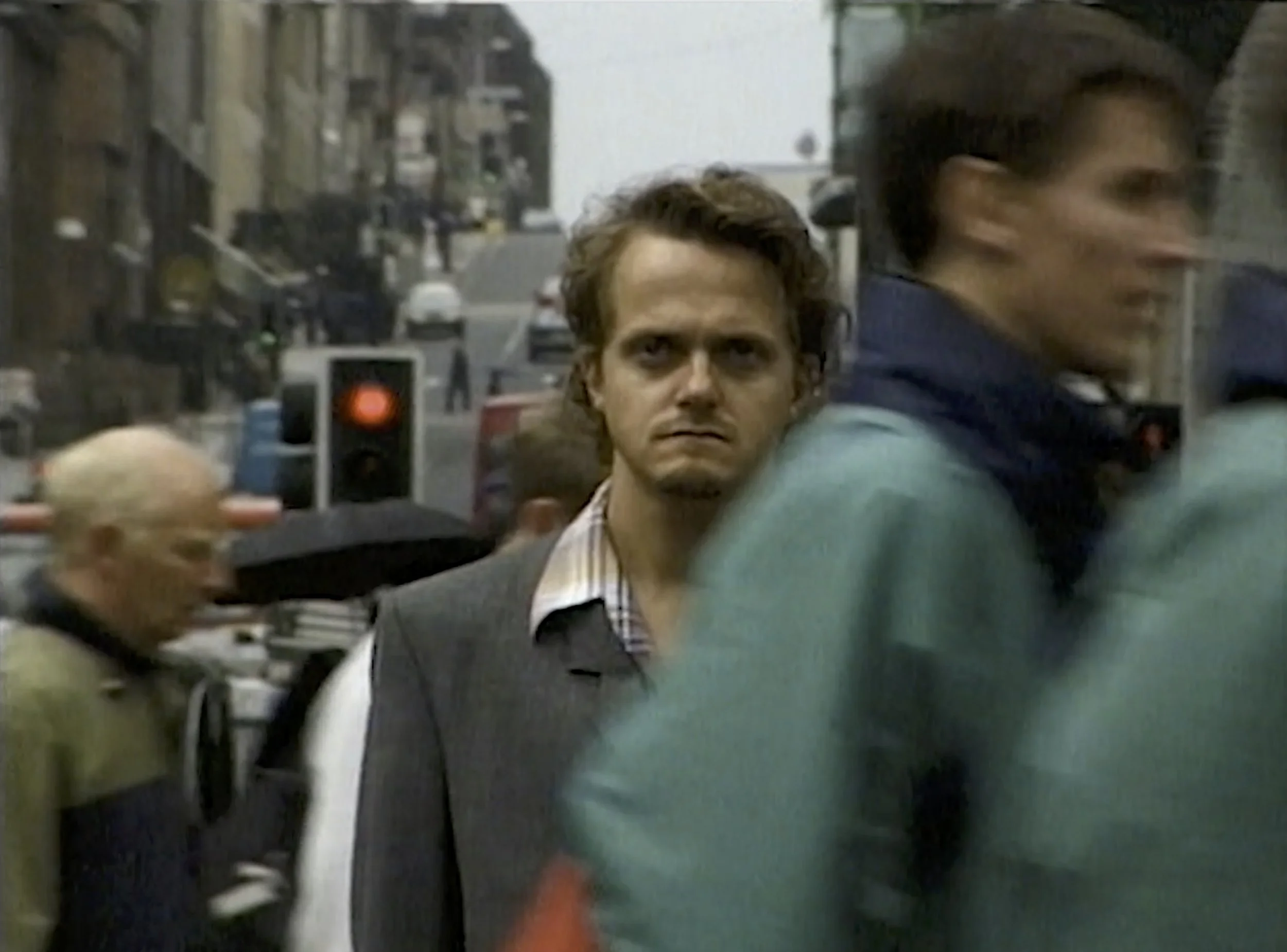
Pictureshow I centred around a male character, Penn, who arrives in a fusion city of Montreal and Glasgow and follows his struggle to communicate and find his place in a foreign environment. The projected images created a cinematic city scope in the performance space and showed the character Penn in many different contexts.
However, rather than the projections simply providing a moving backdrop for the live performance, the two were interactive in that the images were projected into large rectangular boxes on wheels which the performer (Harold) moved around the stage. In doing so, he changed the actual shape and size of the the performance space and controlled how the audience saw the images, as the various configurations of surfaces fragmented them, altering their scale and creating patterns of repetition.”
“The next stage of the project, Pictureshow II, was presented in Montreal at the end of March (1998). Here we wanted to incorporate the projections in a more intimate way than had been explored in Pictureshow I, by weaving them into the narrative rather than simply providing a context for the action.
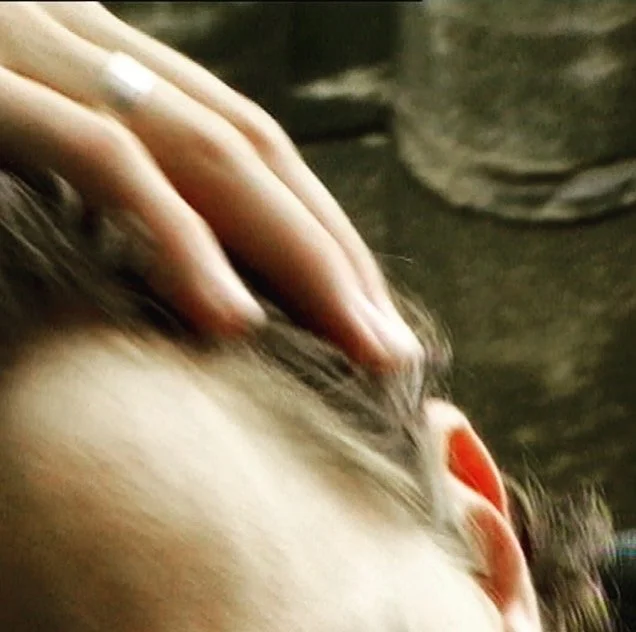
As the performance began, Penn is discovered sitting under a table in a tiny room. It becomes apparent that he has lost the ability to use his legs. On the table above him is an old radio which he switches on. The music from the radio motivates him to move and in doing so, he is brought face-to-face with his memories, represented by the video images.
We did not want the audiences to have to make the decision between watching the live performance or the video images, a conflict that often makes multi-media performances frustrating watching. So we attempted to incorporate the images absolutely and to have the performer and projections interact like partners on the stage.
We achieved this by having the projections appear in the picture frame on the wall and on the table top when the character tips it on its side, as well as on his legs as he takes his first shakey steps. In the narrative, Penn’s memories and imagination, the video images, serve as a catalyst for his rediscovery of his legs, of how to dance and therefore a metaphor for his will to live.
Having taken the element of spontaneity from dance and incorporated it via the camera and editing suite into video dance, these live performances with projections represent an interaction between the two artforms, synthesising a further hybrid, in turn casting its influence back upon dance and video dance.”
Katrina McPherson in Coil, 1998.